
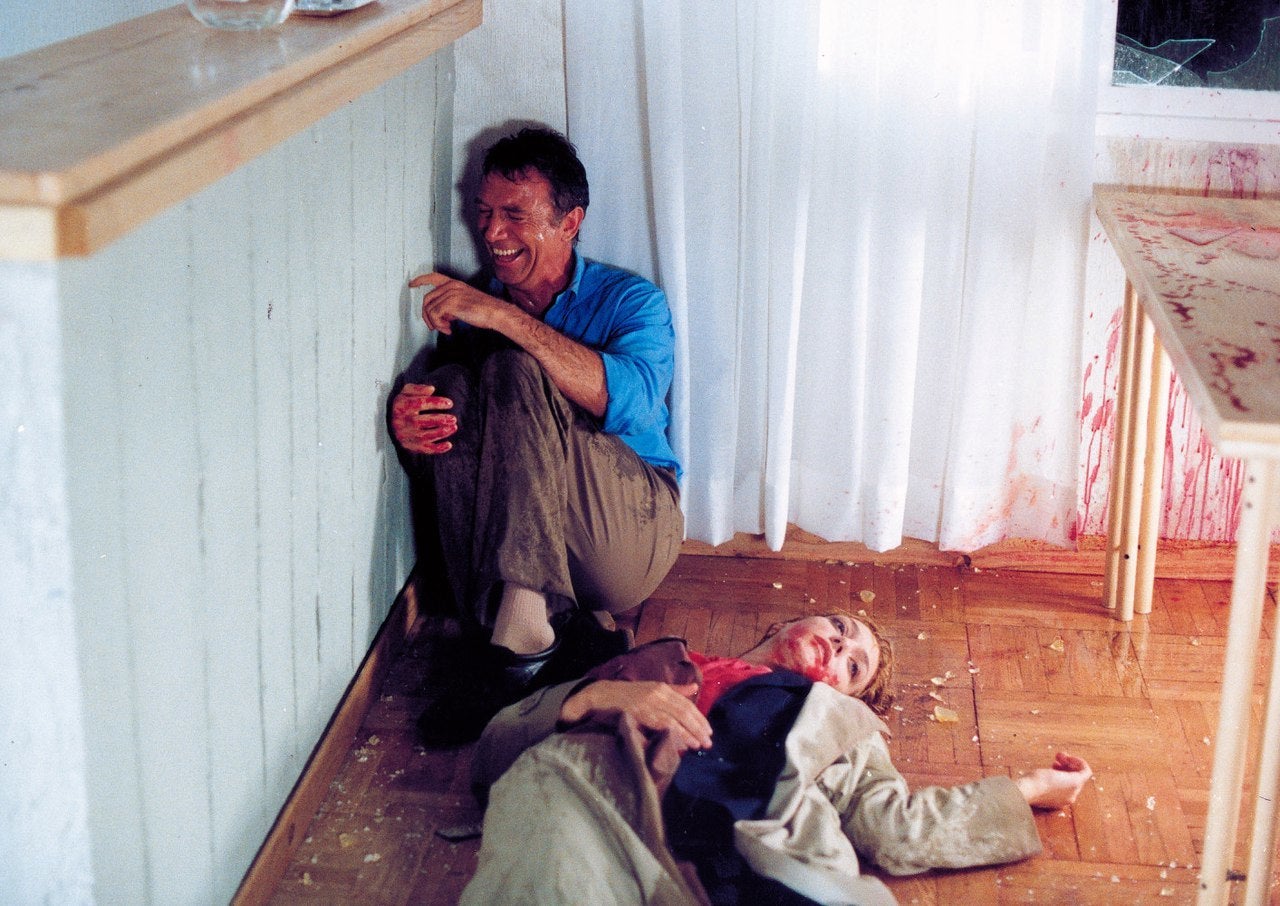
Tenebrae marks Dario Argento’s return to the giallo staple after some supernatural distractions with Suspiria and Inferno. From the diabolically heightened bombast of those two excursions, Tenebrae initially feels a little deflated in comparison. Even compared to Argento’s seventies giallo classics, such as The Bird with the Crystal Plumage, Tenebrae has lost all the genre’s chiaroscuro, ushering in a new, supposedly brighter decade. Yet the impact of the blood is only more shocking against white. Though both the production design and music have donned a hitherto unseen slickness, the brutality remains inimitably baroque.
Suspiria is still the benchmark Argento for me, but within the sheen of Tenebrae, there remains enough excess and innovation to warrant repeated viewings. The film was one of the first instances in which I noticed the subversion of non-diegetic music and it’s something I recently realized I must have subconsciously copied in my own work. The whole sequence in which Goblin’s mutant electronics augment the altitude of an extended crane shot is one of the highlights of the film, both for its delirious bravado and for the realization that we’re not hearing a soundtrack, but someone playing Goblin on the turntable on the top floor. And as for Goblin, in the film’s credits, the music is simply credited to former members Claudio Simonetti, Fabio Pignatelli and Massimo Morante. The music itself is a radical departure from the prog-Goth excess they were known for. Being a colossal fan of both Suspiria and Goblin’s soundtrack to the film, I have to confess to feeling a little disorientated when Messrs. Simonetti, Pignatelli and Morante were let loose on Tenebrae. However, one quickly embraces the new direction the music took and it perfectly enhances the world Argento created here. If anything, the Tenebrae soundtrack is among the most chilling music I’ve ever heard. Its cold and harsh tonality perfectly matches the angular architecture and white surfaces of the film. For anyone familiar with Simonetti‘s disco side-projects during the seventies, the Tenebrae soundtrack is in hindsight a fairly natural progression.
I love the way Tenebrae ends so abruptly on the final scream, which bleeds into the score. The complete disregard for a little tidying up or resolution is fantastic. The presence of John Saxon is also a coup. I’m also intrigued by the fact that a scene featuring Silvio Berlusconi’s former wife, Veronica Lario (who played the bitter ex-wife of the film’s anti-hero), was allegedly posthumously censored.
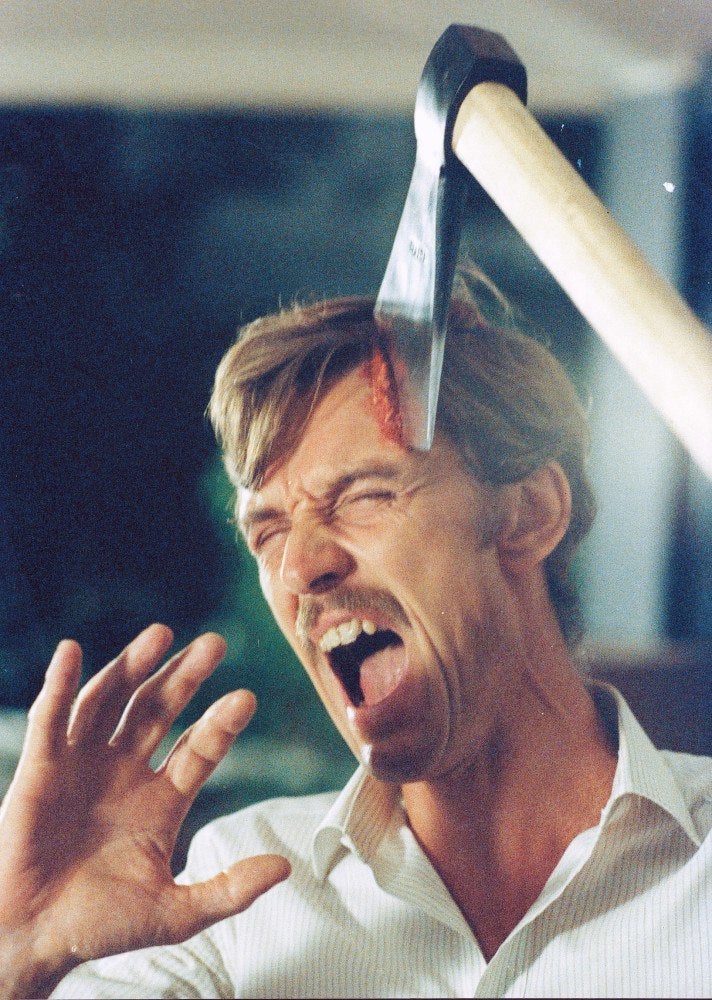
The dubbing (both in English and Italian) is something that I learnt to embrace. The artifice of it all used to bewilder me, but it’s something I’ve grown accustomed to after many years and now I see it as integral to how many films from this genre cast their spell. Stephen Thrower’s book on Lucio Fulci eloquently trashes the oft-used argument that dubbed dialogue is artificial. Mr. Thrower states that many viewers don’t consider the use of sound in the majority of films they watch artificial and that they would balk at authentically recorded sound, as used in many Cassavetes films or Paul Morrissey’s brilliant Flesh-Trash-Heat trilogy. My guess is that Nick Alexander was behind the English dub for Tenebrae, having been the English sound man that horror and giallo directors in Rome would call upon. A whole section is dedicated to the great man in the Alan Jones book, Profondo Argento.
Along with Mario Bava, my favorite giallo films are by Argento. An obvious choice, but obvious because of the visionary set pieces and the way in which he can shroud his worlds in such a unique, creepy atmosphere.
Peter Strickland is the acclaimed director of Berberian Sound Studio, The Duke of Burgundy and In Fabric.


