
The history of American horror and science fiction cinema is inextricably entwined with Universal Studios. In the 1920s, Universal cast Lon Chaney as the Hunchback of Notre Dame and the Phantom of the Opera and Conrad Veidt as the Man Who Laughs, and made the first film version of the old dark house mystery The Cat and the Canary (1927). The Universal Monsters franchise kicked off in the 1930s with Bela Lugosi as Dracula, Boris Karloff as the Frankenstein Monster (and the Mummy) and Claude Rains as the Invisible Man. The 1940s was the era of Lon Chaney Jr as the Wolf Man – and monster rally team-ups that ran from Frankenstein Meets the Wolf Man (1943) to Abbott and Costello Meet Frankenstein (1948). The 1950s, shadowed by the Cold War and the Atom Bomb, shifted the focus of horror from Transylvania to Outer Space, beyond the Iron Curtain, or the by-products of atomic testing programs – and Universal backed science fiction monster movies, many directed by Jack Arnold (some in 3D), including It Came From Outer Space (1953), The Creature From the Black Lagoon (1954), Tarantula (1955) and The Incredible Shrinking Man (1957).
Subsequently, the studio burnished their reputation for scary things with Alfred Hitchcock’s The Birds (1963), Steven Spielberg’s Jaws (1975) and Jurassic Park (1993), John Carpenter’s remake of The Thing (1982), the Child’s Play films, and a 21st century first look deal with horror specialist Blumhouse that yielded the Purge franchise, Get Out (2018) and a this-is-where-we-came-in reboot of The Invisible Man (2020). The studio even found time to make its own creepy B pictures, from House of Horrors (1945) and Curucu Beast of the Amazon (1956) through The Boy Who Cried Werewolf (1973) and SSSSSSS (1973) to Dr Giggles (1992) and Devil (2010).
… then there’s Tremors.
Film fans often complain that critics don’t understand monster movies – but in 1990, Tremors went against tradition by garnering great reviews and doing only so-so business. Made on a modest budget of $10 million, Tremors hauled in American theatrical rentals of $16,667,084… which, when international takings are taken into account against distribution costs, made it modestly profitable, though not nearly what the studio’s forecasters expected given favourable preview reactions and the critical thumbs-up. Some blame the marketing, but the posters and trailer look fine to me.
It came out in January and was in cinemas around the time few people were going to Clive Barker’s Nightbreed either; I saw both on the same evening in near-empty downtown Los Angeles cinemas. These things happen – pretty much exactly the same box office fate awaited James Gunn’s Slither in 2006, which also managed a mix of intelligent science fiction and rural black humour.
But Tremors had an afterlife.
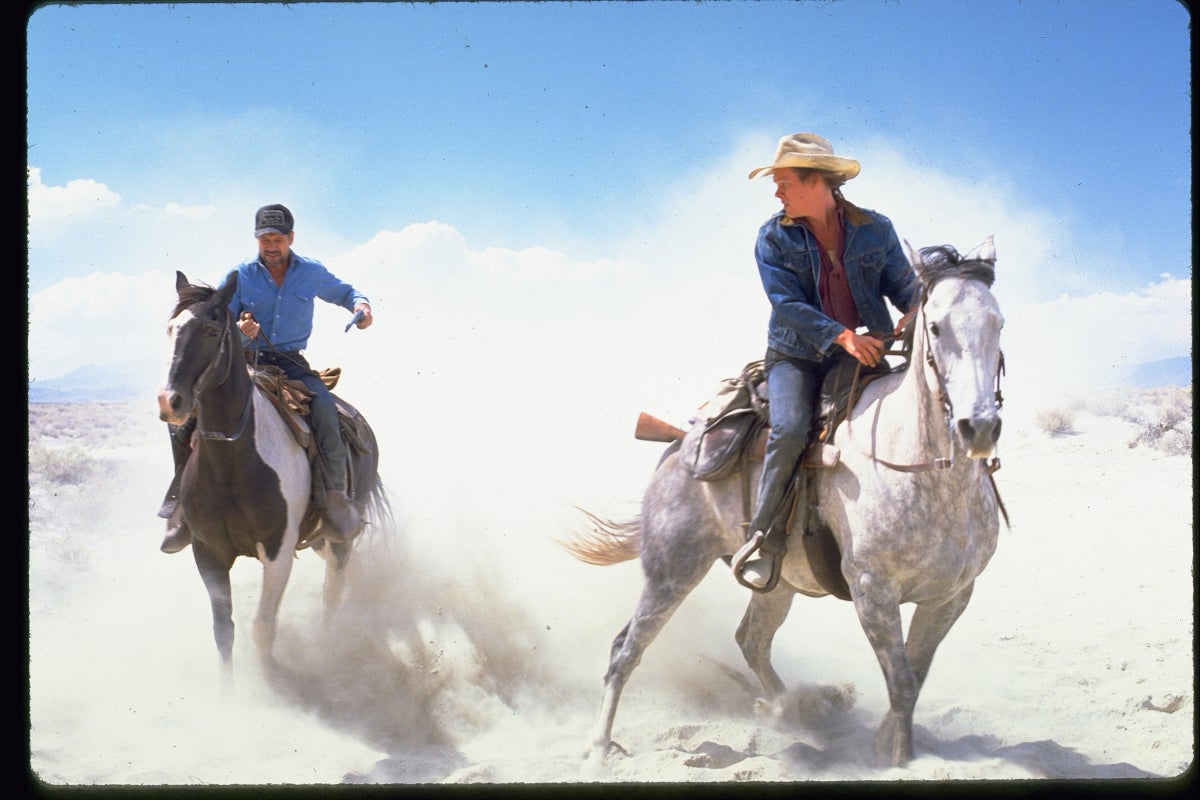
In the 1990s, the ancillary medium of choice was rental video and Tremors proved popular in video stores as it was discovered by audiences who’d missed its brief theatrical window and now watched it over and over. Indeed, the tape success of Tremors launched a franchise that has proved to be surprisingly long-lasting (outliving rental video, for a start)… as witness Tremors 2: Aftershocks (1996), Tremors 3: Back to Perfection (2001), the Sci-Fi Channel’s Tremors: The Series (2003), Tremors 4: The Legend Begins (2004), Tremors 5: Bloodlines (2015), an unsold pilot for another TV series (2017), Tremors: A Cold Day in Hell (2018) and Tremors: Shrieker Island (2020).
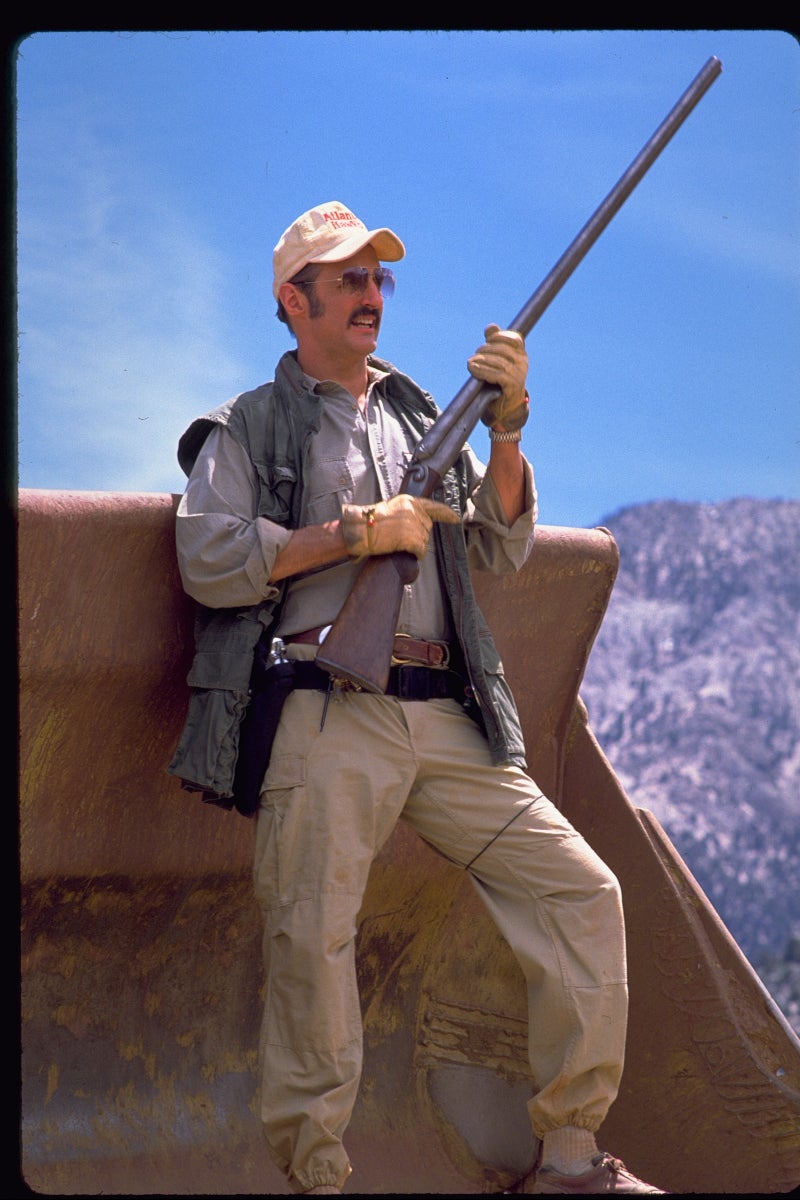
Gun-nut supporting character Burt Gummer, played by Michael Gross, has stuck with the series and become its lasting face. Others, including original stars Kevin Bacon and Fred Ward and latecomer Jamie Kennedy, have come and gone. Tremors 3: Back to Perfection brings back Tremors survivors Tony Genaro, Charlotte Stewart, Bobby Jacoby/Robert Jayne and Ariana Richards; youngsters in the first film, Jacoby and Richards returned to their roles as grown-ups – with asshole kid Melvin now an asshole property developer and sweet child Mindy now a sweet teen. In Tremors, a throwaway line after the Gummer arsenal has been useful in seeing off monsters is “I guess we don’t get to make fun of Burt’s lifestyle anymore.” As Burt has become central to the franchise, his lifestyle remains the butt of jokes but he represents a friendlier face of tooled-up right-wing conspiracy nutcase than most other media representations of his type.
The creators of Tremors were director Ron Underwood and writers S.S. Wilson and Brent Maddock. Wilson and Maddock, who had scripted the Short Circuit films and Batteries Not Included (1987), collaborated with fi rst-time director Underwood on the script, a loving homage to the creature features of the fi fties. It deliberately harks back to other Universal monster movies with echoes of the desert/small town setting of It Came From Outer Space and Tarantula and a brush with an unknown prehistoric species along the lines of The Creature From the Black Lagoon. The original pitch was called Land Sharks – suggesting a kinship with Jaws, another Universal franchise that inspires imitations to this day (including Avalanche Sharks, Sand Sharks and other Tremors-like mutants).
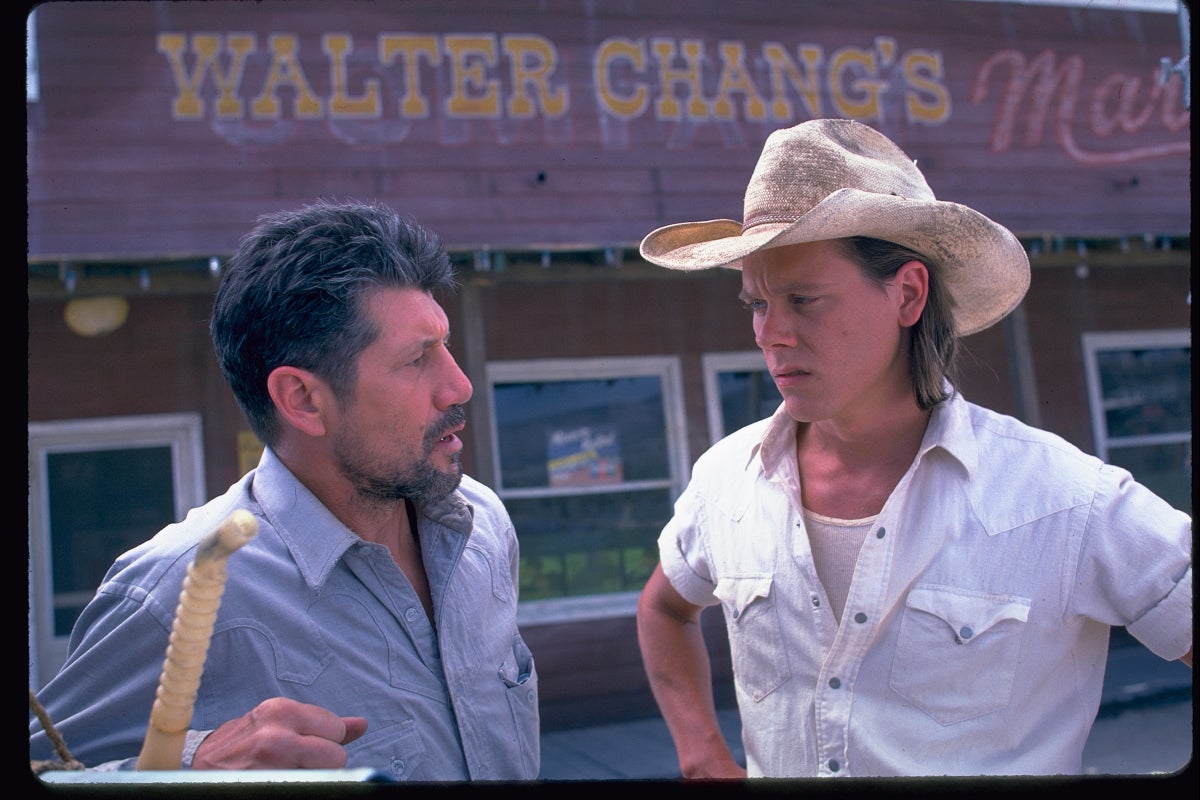
In its plot, Tremors adheres to the classic monster movie structure (you can see it in Tarantula and The Birds too). In the out-of-the-way settlement of Perfection, Nevada, handymen Valentine McKee (Kevin Bacon) and Earl Bassett (Fred Ward) struggle along on odd jobs, running jokes and grumpy camaraderie – much like the amiably feckless cowpokes Glenn Ford and Henry Fonda play in The Rounders (1965). An unseen, unknown fi end causes early deaths – an old-timer dead of thirst up an electricity pylon, a decapitated shepherd and his slaughtered sheep, a couple’s car pulled underground by snakelike toothy tentacles. The film wastes little time on townsfolk disbelieving the heroes’ monster stories, since Perfection is soon cut off from the world and its inhabitants are driven to seek refuge on their roofs while the burrowing creatures attack repeatedly.
There’s discussion as to what the monsters should be called, with mercenary store owner Walter Chang (Victor Wong) settling on ‘Graboids’ and dreaming up schemes to capitalize on the discovery – in one of the sequels, a funny moment has a tourist getting the terminology wrong and asking: “Is that a Tremor?” Adapting the parable of the blind men and the elephant, the Graboids turn out not to be what we think they are when we only know about parts of them. Those maw-tipped tentacles aren’t the whole beast, but the tongues of a giant armoured worm creature. A seismologist, Rhonda LeBeck (Finn Carter), fills the role of female scientist, in the tradition of many 1950s lab-coated glamour girls – but, amusingly, this stresses that though Rhonda is up in her field she knows as little about prehistoric cryptids as anyone else. Wilson and Maddock stayed on for the first three sequels, even taking turns directing, and elaborated on the Graboid life cycle, with the second and third film introducing new stages in their monstrous metamorphosis, the hungry, vicious Shrieker and the combustive, air-borne Ass Blaster.
A great tradition of monster movies is improvised defence, and Tremors spins off from its ridiculous premise with practical notions. Like the classic moment in The Killer Shrews (1959) where characters escape mutant rodents by duck-walking under dustbins, the monster-fi ghting tactics in Tremors look foolish (pole-vaulting between rocks) but might actually work in the circumstances. The folks of Perfection don’t have the resources to build the sonar cannons that see off aliens in Earth vs the Flying Saucers (1956) but pretty soon fi gure out the monsters’ strengths and weaknesses and act accordingly. In sequels, Earl Bassett and Burt Gummer gain reputations as Graboid hunters… but they’re still fairly clumsy about it, and survive mostly thanks to supporting characters who don’t pay them much attention. An interesting, underappreciated aspect of the franchise as a whole – and a counterbalance to the valorising of survivalist idiot Burt – is that the series features a range of interesting, un-stereotyped, respectful depictions of frontier womenfolk and non-white characters.
Ron Underwood proceeded from Tremors to City Slickers (1991), a hit cowboy comedy without monsters (except perhaps Jack Palance), and other major studio projects – Heart and Souls (1993), Speechless (1994) and the remake of Mighty Joe Young (1998) – before slamming into the brick wall of the enormously expensive Eddie Murphy flop The Adventures of Pluto Nash (2002) and reinventing himself as a handy director of series television. Wilson and Maddock stuck with the Tremors series until the Western prequel Tremors 4: The Legend Begins, in which Gross plays a clueless Gummer ancestor coming up against ‘dirt dragons’ in the days when the town was called Rejection – but also had the misfortune to be associated with career derailing disasters, the Bill Cosby vehicle Ghost Dad (1990) and the TV series reboot Wild Wild West (1999). The fact that thirty years on, Tremors is still an active franchise – in far healthier shape than rivals like the Critters, Lake Placid, Species, Leprechaun or Anaconda movies – suggests just how well the mix worked on the first film. Much of it is down to the sheer likeability of the leads – Bacon and Ward, like Tremors itself, have never had superstar status, but improve every fi lm they’re cast in, and Val and Earl are among their best characterizations. They may seem like foul-ups and have plainly been having the same conversations for years, but they’re real heroes when the monsters turn up. And they both deserve to get the girl, as preview audiences insisted when the fi rst cut didn’t end with a clinch between Val and Rhonda… though Earl didn’t get a love interest until Tremors 2: Aftershocks, when Ward has as much chemistry with Helen Shaver as Bacon does with Carter.
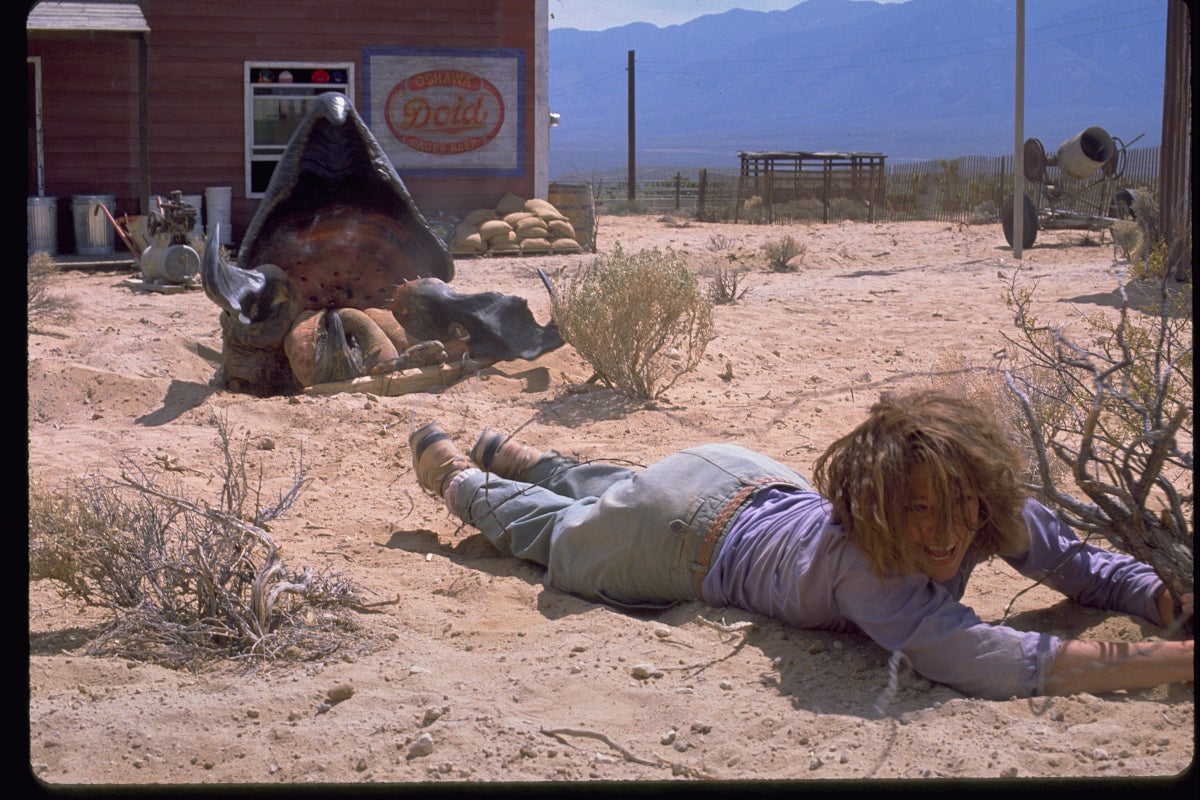
The Graboids were created by Amalgamated Dynamics, a special effects company founded by Tom Woodruff Jr and Alec Gillis, who had worked with effects pioneer Stan Winston. Woodruff even wore monster suits, playing the Gill Man in The Monster Squad (1987), Pumpkinhead in Pumpkinhead (1988) and the lead Alien in Alien 3 (1992). Tremors was shot in 1989 – about the time James Cameron was first experimenting with CGI effects in The Abyss – and is a late triumph of practical effects. Though Amalgamated Dynamics would embrace CGI with Death Becomes Her (1992), and increasingly use computers to augment the monsters of the Tremors sequels, Woodruff and Gillis remain advocates for old-school practical monsters – self-producing Harbinger Down (a.k.a. Inanimate, 2015) as a showcase for workshop-crafted monster skills in danger of becoming extinct.
The Graboids are a pleasing design, executed with skill – often manifesting as rippling earth or collapsing buildings, and only really seen as a whole creature in the climax. Given the boom in Universal Monsters merchandise (yes, I own a Phantom of the Opera mouth organ and a Creature From the Black Lagoon water pistol), it’s surprising that Tremors merchandising seems to exist mostly as a running joke in the films – where are the Graboid lunch-boxes, the Shrieker alarm clocks and the Ass Blaster cigarette lighters?
On its own merits, Tremors remains a little miracle: good-humored, but free of snark; suspenseful and gruesome, but not too upsetting; literally down-to-earth in a field overrun with stargazing; enamored of its imaginary creatures, but always more struck by its human characters; and legitimately exciting, stirring, romantic and strange, in a classic movie style that looked back to well-crafted studio genre pictures but now seems timeless and built to last.


